
Step-by-Step Guide to Filing Workmans Comp Claims
In Florida, filing workmans comp begins with prompt medical care, written notice to your employer within 30 days, and completion of the state injury report form. When an unexpected injury happens on the job, navigating the legal requirements for filing workmans comp can feel overwhelming. Many workers worry about saying the wrong thing, missing a technical deadline, or losing their income. Fortunately, the process becomes straightforward once you break it down into manageable steps. If you are filing workmans comp for the first time, understanding how the pieces fit together will give you confidence as you move forward. For a deeper dive, see this practical guide to filing workers comp claims.
Immediate Actions: Medical Treatment and Injury Reporting
Your health always comes first. If you experience an acute injury on the job—such as a fall, a machinery accident, or a severe burn—seek emergency medical attention immediately. Tell the emergency room staff that your injury happened at work so they can code your intake paperwork properly.
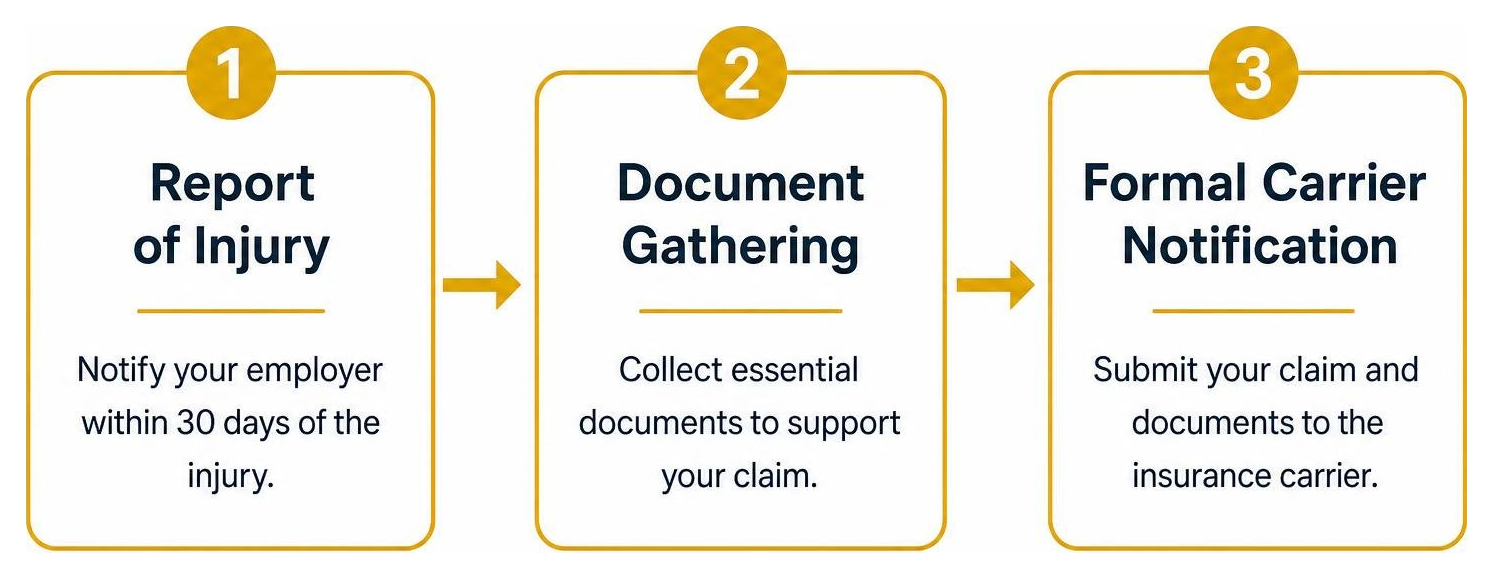
For non-emergency situations, report the injury to your employer before going to a random walk-in clinic. In Florida, Chapter 440 of the Florida Statutes sets a strict 30-day reporting window. You must notify your supervisor or human resources department within 30 days of the incident or within 30 days of when a doctor first tells you that your condition is work-related.
When you report the incident:
- Provide a clear, written notification specifying the date, time, and exact location of the accident.
- Clearly state what you were doing when the injury occurred and what parts of your body hurt.
- Request the name of your employer’s authorized treating clinic or physician network.
- Keep a signed and dated copy of your written notice for your personal records.
Essential Documents Needed Before Filing Workmans Comp
Accurate documentation prevents unnecessary delays and helps your claim handler evaluate your case smoothly. Before submitting your paperwork, gather these foundational documents:
- State Injury Report Form: The official First Report of Injury or Illness (Form DFS-F2-DWC-1) captures all baseline information about the incident.
- Accident Narrative: Write a chronological, detailed summary of the events leading up to the injury. Avoid vague terms like “my back hurt” and instead use descriptive facts such as “I felt a sharp pop in my lower back while lifting a 50-pound box from the floor.”
- Medical Records and Intake Notes: Collect copies of all discharge instructions, physical therapy orders, and physician work-status slips.
- Wage Records: Gather pay stubs from the 13 consecutive weeks immediately prior to your accident, as these establish your baseline earnings.
- Witness Statements: If coworkers saw what happened, ask them to write down what they observed while their memories are fresh.
Critical Deadlines and Timelines for Filing Workmans Comp
Staying mindful of statutory deadlines is vital. Florida workers must adhere to specific Florida statutory timeframes:
- 30-Day Notice to Employer: You must report your injury to your employer within 30 days of the accident.
- 7-Day Employer Reporting Rule: Once you notify your employer, they must report the injury to their insurance carrier within 7 days.
- 14-Day Insurer Communication: The insurance carrier must provide you with an informational brochure and contact you within 14 days of receiving notice of the injury.
- 90-Day Compensability Window: The insurance company has up to 90 days to investigate and make a final decision to accept or deny your claim. However, they must provide necessary medical care during this period under a reservation of rights.
- Two-Year Statute of Limitations: In Florida, you generally have two years from the date of injury (or one year from your last authorized medical treatment or indemnity payment) to file a formal Petition for Benefits.
Missing these windows can allow the insurance company to assert late notice defenses, potentially barring you from recovering lost wages or medical benefits.
What Happens After You Submit Your Claim Form

Once your employer submits the report of injury to their insurance company, a claims adjuster is assigned to your file. The adjuster investigates the accident, verifies your employment status, reviews initial medical notes, and determines whether your injury arose out of and in the course of your employment.
During this investigation, Florida law provides helpful safeguards so you do not have to wait for treatment. Under applicable rules, insurance carriers can authorize up to $10,000 in emergency and diagnostic medical treatment while your claim’s compensability is actively being determined. Medical providers bill the insurance carrier directly, meaning you should never receive out-of-pocket bills for authorized care.
Understanding Benefits, Medical Coverage, and Doctor Selection
Workers’ compensation provides several categories of benefits designed to keep you financially stable and physically supported during recovery.
| Benefit Type | Eligibility Criteria | Payment Rate & Duration |
|---|---|---|
| Temporary Total Disability (TTD) | You are entirely unable to work due to medical restrictions set by your authorized doctor. | 66 2/3% of your Average Weekly Wage (up to 80% for specific severe injuries) for up to 104 weeks. |
| Temporary Partial Disability (TPD) | You can return to work on light duty but earn less than 80% of your pre-injury wage. | Up to 80% of the difference between your pre-injury earnings and what you can earn on light duty. |
| Permanent Impairment Benefits (PIB) | You have reached Maximum Medical Improvement (MMI) but have a lasting physical impairment. | Paid weekly based on your assigned percentage impairment rating after MMI. |
| Medical Benefits | All reasonable and medically necessary care related to the workplace accident. | Paid 100% directly by the carrier for authorized doctor visits, surgery, therapy, and prescriptions. |
Your wage replacement checks depend on your Average Weekly Wage (AWW). Under Florida law, your AWW is calculated by taking the total gross wages you earned during the 13 weeks prior to your injury and dividing that sum by 13.
Regarding medical treatment, your employer’s insurance carrier selects your initial authorized treating physician. However, you are entitled to a statutory one-time change of physician during your claim. If you request a change in writing, the carrier has 14 days to provide a new doctor. If they fail to provide one within that 14-day window, you gain the legal right to select your own physician at the carrier’s expense.
Nonelection of Coverage vs. Standard Workers’ Comp Insurance
Not every working individual on a job site carries traditional workers’ compensation coverage. In certain industries, such as construction or specialized consulting, business owners, corporate officers, and sole proprietors may choose to file a “Nonelection of Coverage” or formal exemption with the state.
A nonelection of coverage means the individual has opted out of workers’ comp benefits to lower payroll insurance premiums. When an officer or owner signs a valid nonelection, they cannot recover workers’ compensation benefits through the business’s policy if they hurt themselves on the job.
However, employers cannot force or coerce regular employees into signing a nonelection form or misclassify them as exempt independent contractors. If you were injured on the job and your employer claims you are exempt or not covered, a thorough legal review can determine whether you are actually an employee entitled to full statutory protections.
Resolving Denials, Medical Disputes, and Employer Retaliation
Insurance carriers routinely deny legitimate claims or refuse to authorize necessary medical procedures like MRIs, specialist referrals, or corrective surgeries. If your claim is denied, you do not have to accept that decision as final. Understanding your rights and securing Florida legal representation allows you to challenge the insurance company through the formal dispute resolution process.
Disputing Benefit Denials and Medical Decisions
Florida disputes are resolved through the Florida Office of the Judges of Compensation Claims (OJCC).
If an insurer denies your benefits or refuses medical care:
- File a Petition for Benefits (PFB): Your attorney files a formal legal petition detailing the specific benefits, medical tests, or wage payments that were wrongfully withheld.
- State Mediation: Once a PFB is filed, the state schedules a mandatory mediation conference. An independent mediator works with both sides to resolve the dispute without a trial.
- Independent Medical Examination (IME): If there is a medical disagreement regarding work restrictions or treatment necessity, an injured worker or their lawyer can request an IME to obtain a second opinion from an independent doctor.
- Final Evidentiary Hearing: If mediation does not resolve the issue, the case goes before a Judge of Compensation Claims, who hears testimony, reviews medical evidence, and issues a binding legal ruling.
Protection Against Workplace Retaliation and Wrongful Termination
A common fear among injured employees is that their employer will fire or demote them for filing a claim. Florida law strictly prohibits this behavior under Florida Statutes Section 440.205.
It is unlawful for any employer to discharge, threaten to discharge, intimidate, or coerce an employee because the employee claimed or attempted to claim workers’ compensation benefits. If an employer retaliates against you for exercising your lawful rights, you may be entitled to recover lost wages, compensatory damages, and reinstatement. If you suspect retaliation or unfair treatment, connecting with experienced local attorneys will help protect your rights and your career.
Frequently Asked Questions about Filing a Workers’ Comp Claim
To help you stay fully informed, here are answers to common questions about navigating the workers’ comp system. For more detailed topics, review our frequently asked questions page.
What should I do if my employer refuses to provide a claim form?
If your employer refuses to give you an injury report form or refuses to report your accident to their insurance carrier, you can take action directly:
- Contact the insurer directly if you know their name (often posted on mandatory labor law posters in employee break rooms).
- Send a certified letter with return receipt requested to your employer detailing your injury, creating an indisputable record of notice.
- Contact the Florida Division of Workers’ Compensation Employee Assistance and Ombudsman Office (EAO) for administrative support.
- Speak with a workers’ compensation attorney who can identify the carrier through state databases and file the necessary claims on your behalf.
How is my Average Weekly Wage calculated for benefit checks?
Your Average Weekly Wage (AWW) is based on your gross earnings during the 13 weeks immediately before your injury date. The formula accounts for:
- Regular hourly pay and overtime.
- Performance bonuses and sales commissions.
- Tips and gratuities that were reported for tax purposes.
- Wages earned from a second or concurrent job held during the same 13-week period.
All gross earnings over those 13 weeks are added together and divided by 13 to establish your baseline rate.
Can I choose my own doctor or switch physicians during treatment?
In non-emergency scenarios, you must receive care from a doctor authorized by your employer’s insurance carrier. However, you are not locked into that doctor forever. Under Florida law, you have the right to request a one-time change of physician at any point during your treatment. The insurance carrier must select a new physician for you within 14 days of receiving your written request. If they fail to meet this 14-day statutory deadline, you are legally entitled to select your own doctor.
Conclusion
Successfully filing workmans comp promptly and accurately ensures you receive the medical care and wage replacement you deserve. By reporting your injury within the 30-day window, documenting every symptom, and adhering to state guidelines, you protect both your health and your financial stability.
Navigating insurance companies, authorized doctor networks, and administrative deadlines can be stressful when you are trying to recover from an injury. At Panzer Law, P.A., we represent injured workers throughout South Florida—including Boca Raton, Miami, West Palm Beach, Palm Beach County, and Miami-Dade County. We handle everything from initial claim filings to complex medical disputes and settlement negotiations.
Because we operate on a no-recovery, no-fee model, you pay no attorney fees or costs unless we recover compensation for you. If you have questions about your injury or need assistance with your claim, reach out to the Workers Comp Law Firm Panzer Law today for a free consultation.
