

How to Find the Best Workplace Injury Lawyers
The best workplace injury lawyers for your case know your state’s workers’ compensation rules and have handled injuries and claim disputes like yours. In Florida, start by checking an attorney’s license and disciplinary history with The Florida Bar. Then ask about similar cases, who will handle your claim, how they respond to denied benefits, and what you would owe in fees and costs.
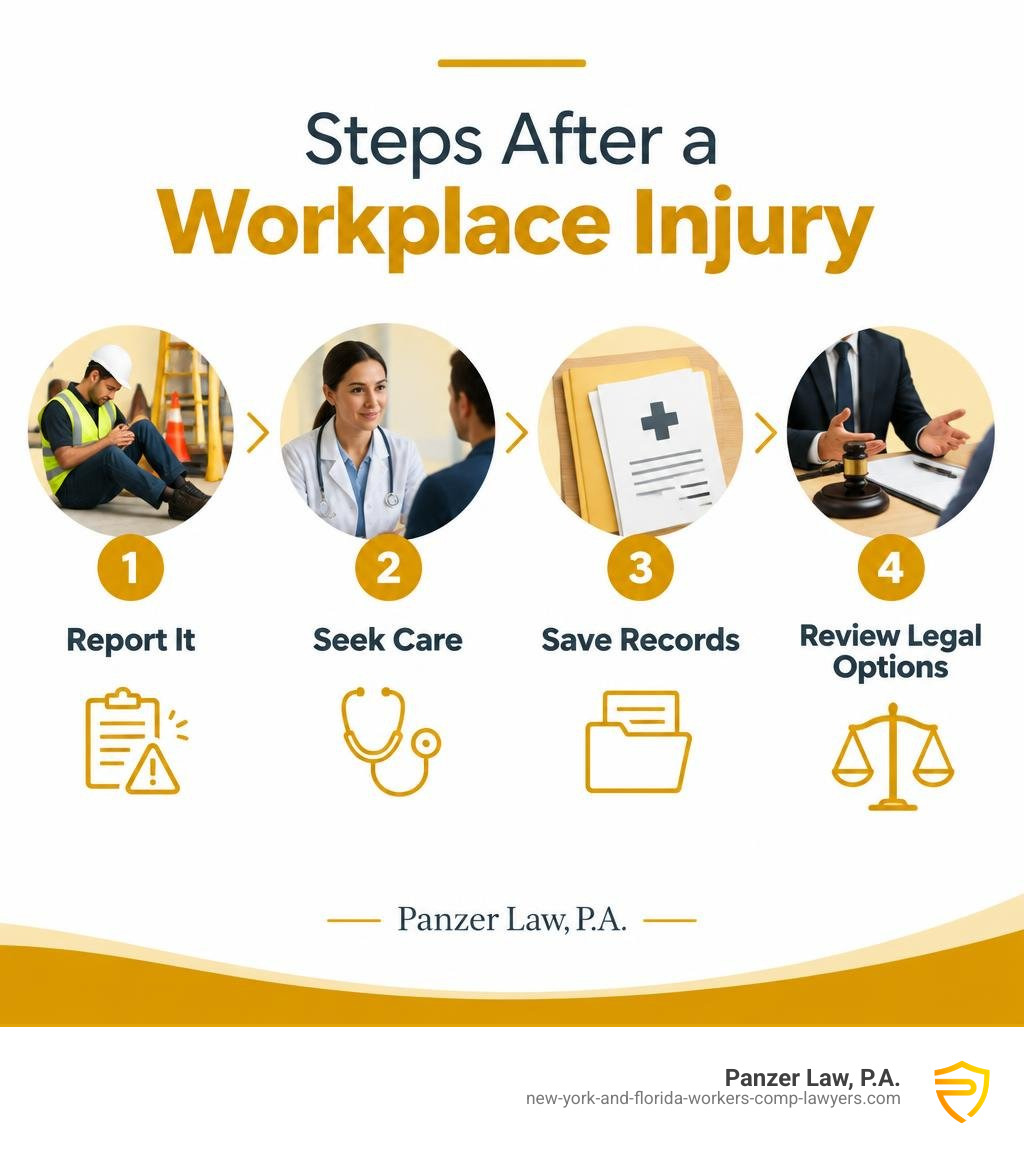
If you’ve been hurt at work, report the injury promptly, seek medical care, and keep copies of claim notices and medical records. A lawyer can help you understand your options if treatment or wage benefits are delayed or denied.
I’m Gil Panzer, owner and attorney at Panzer Law, P.A. I earned my law degree in 1993 and have spent more than three decades helping injured workers in Florida and New York with medical care, benefits, and settlements; this guide explains how to assess the best workplace injury lawyers for your needs.
Types of Claims Handled by the Best Workplace Injury Lawyers
Workplace accidents happen in a fraction of a second, but their physical and financial consequences can linger for years. Whether you are operating heavy machinery on a job site, working in a bustling hospitality environment, or managing inventory in a logistics warehouse, severe occupational hazards exist across every sector. When an accident occurs, navigating the legal framework requires careful attention to statutory timelines and strict procedural rules. Consulting a practical guide to filing workers comp claims helps ensure you do not miss critical initial reporting deadlines.
The legal teams who specialize in this field routinely manage complex matters involving extensive medical records, occupational therapy plans, wage calculations, and permanent impairment ratings. They focus on securing full wage-replacement benefits and specialized medical treatment while shielding injured employees from unfair insurance carrier tactics.
Catastrophic and Traumatic Physical Injuries
Catastrophic workplace injuries alter lives permanently. These severe events require immediate, high-level medical intervention and ongoing rehabilitation. Common traumatic injuries include:
- Traumatic Brain Injuries (TBIs) and Concussions: Resulting from falls from ladders, falling scaffolding materials, or vehicular collisions on the job.
- Spinal Cord Damage and Paralysis: Often leading to partial or total loss of motor function, necessitating home modifications and lifelong care.
- Crush Injuries and Amputations: Frequently occurring in industrial settings around heavy equipment, mechanical presses, or moving vehicles.
- Severe Burns and Electrocutions: Arising from exposed wiring, electrical arc flashes, or industrial chemical fires.
In these matters, assigning an accurate permanent impairment rating is vital. This clinical score directly influences the duration and monetary value of statutory impairment benefits.
Occupational Diseases and Toxic Exposures
Not all occupational injuries stem from a single dramatic accident. Many debilitating conditions develop gradually over months or years of regular labor:
- Repetitive Stress Trauma: Chronic tendonitis, carpal tunnel syndrome, and degenerative disc disease caused by continuous heavy lifting or repetitive assembly tasks.
- Toxic Chemical Exposure and Respiratory Disorders: Conditions like occupational asthma, chronic obstructive pulmonary disease (COPD), or mesothelioma caused by prolonged airborne exposure to industrial solvents, silica dust, or asbestos.
- Occupational Hearing Loss: Progressive sensory damage resulting from unprotected exposure to loud equipment over an extended career.
Proving that an occupational disease arose directly out of and in the course of employment requires detailed medical evidence, epidemiological records, and seasoned legal advocacy.
Workers’ Compensation Claims vs. Third-Party Personal Injury Lawsuits

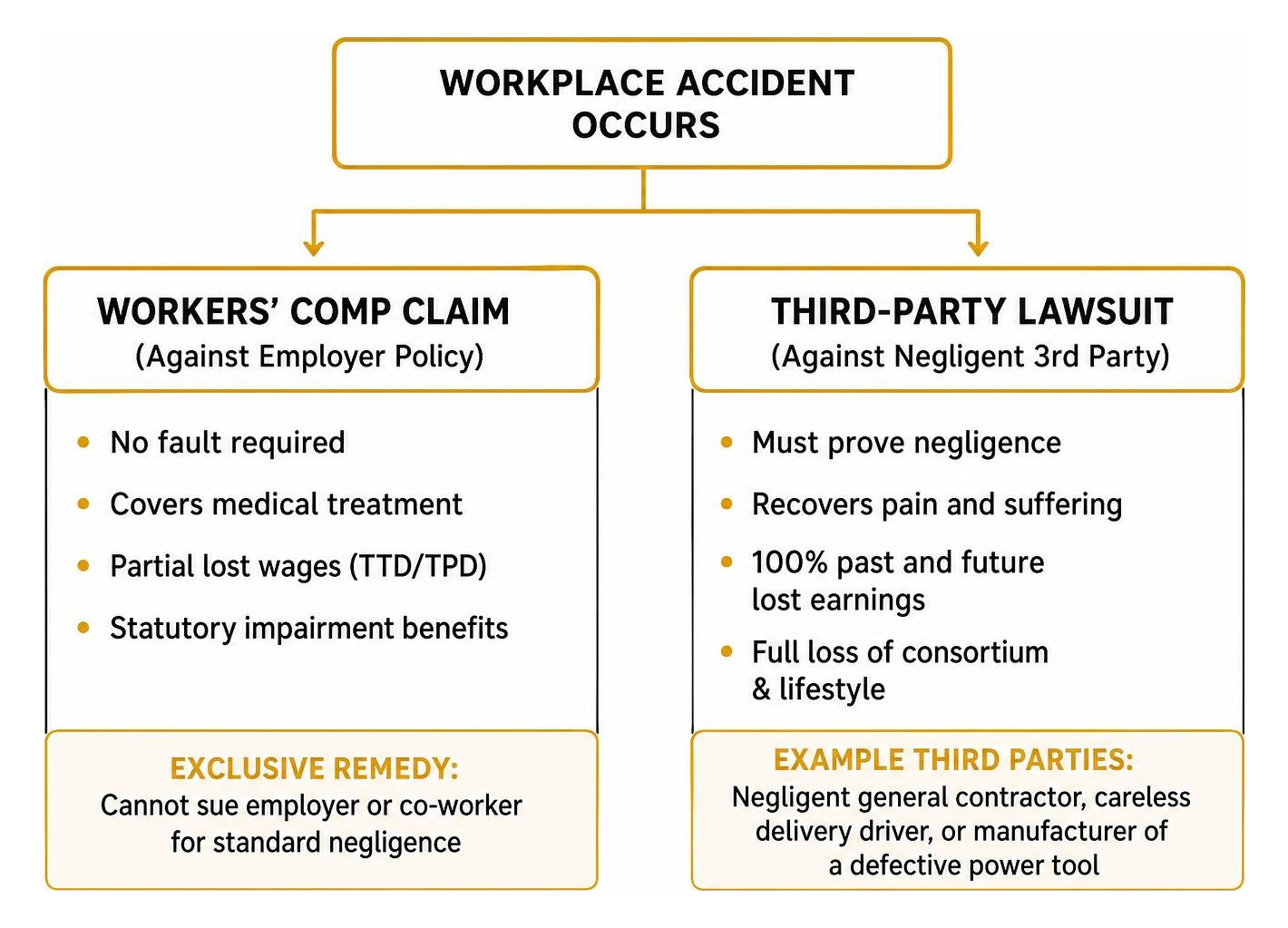
A frequent point of confusion for injured workers is the distinction between a statutory workers’ compensation claim and a third-party personal injury lawsuit. Under Florida and New York laws, workers’ compensation operates as an “exclusive remedy.” This means you generally cannot sue your direct employer or a co-worker for standard negligence in exchange for receiving no-fault statutory benefits.
However, if an outside entity contributed to your injuries—such as a negligent general contractor, a careless delivery driver, or the manufacturer of a defective power tool—you may pursue a separate third-party personal injury lawsuit alongside your workers’ compensation claim.
Workers’ Compensation Statutory Benefits
Workers’ compensation is designed to provide rapid financial relief without the need to establish fault. When an injury is reported properly, the employer’s insurance carrier is legally obligated to provide:
- Authorized Medical Care: All medically necessary doctor visits, diagnostic imaging, surgeries, physical therapy, and prescription medications.
- Temporary Total Disability (TTD) or Temporary Partial Disability (TPD): Wage replacement benefits that typically cover a percentage of your average weekly wage while you recover.
- Impairment Income Benefits: Financial compensation based on your permanent impairment rating once you reach maximum medical improvement (MMI).
To understand how these benefits are claimed and preserved under state laws, review our workers comp claim representation guide.
Third-Party Personal Injury Damages
When a non-employer third party is responsible for your injuries, filing a civil personal injury lawsuit opens the door to damages not available under workers’ compensation statutes:
- Pain and Suffering: Compensation for physical discomfort, mental anguish, and emotional distress.
- Full Lost Earnings: Recovery of 100% of past lost income and future loss of earning capacity (rather than the statutory caps imposed by workers’ comp).
- Loss of Consortium: Damages awarded to compensate your spouse for the disruption to your family relationship and companionship.
The table below summarizes the key differences between these two legal options:
| Benefit / Feature | Workers’ Compensation Claim | Third-Party Personal Injury Lawsuit |
|---|---|---|
| Fault Requirement | No-fault system (no need to prove employer negligence) | Must prove defendant was legally negligent |
| Medical Expenses | 100% covered through authorized medical providers | Recoverable as past and future economic damages |
| Wage Loss Replacement | Partial wage reimbursement (subject to statutory weekly caps) | 100% of past and projected future lost earnings |
| Pain & Suffering Damages | Not available under statutory law | Fully recoverable based on injury severity |
| Trial by Jury | Handled before an administrative law judge | Heard by a civil jury or trial judge |
How to Select and Vet Top Legal Representation

Choosing legal representation after a serious work accident is one of the most critical decisions you will make. You need a dedicated advocate who will step in, handle insurance adjusters, and ensure your medical care is fully authorized. Taking the time to properly vet your counsel is essential to protecting your benefits with an experienced attorney.
How to Evaluate the Track Record of Legal Counsel
When researching potential firms, look beyond glossy advertising billboards and assess verifiable credentials:
- Specific Case Experience: Ensure the lawyer has direct experience handling workplace accidents and workers’ compensation hearings, rather than handling general civil matters exclusively.
- Trial Readiness: Insurance companies know which lawyers settle cheaply and which ones are fully prepared to take a contested petition to a formal final hearing.
- Peer Recognition and Accreditations: Top practitioners are regularly evaluated by their colleagues and listed in peer-reviewed legal directories such as Martindale-Hubbell (AV Preeminent ratings) and Super Lawyers.
Crucial Questions to Ask During Your Initial Consultation
Before signing a representation agreement, schedule a consultation and ask targeted questions to ensure the firm aligns with your needs. You can consult our top-rated workers comp lawyer guide for additional preparation tips. Key questions include:
- Will my case be handled directly by an experienced attorney, or will it be delegated entirely to paralegals and case managers?
- What is your regular communication policy, and how quickly can I expect return calls when issues arise?
- How do you approach insurance denials for medical procedures or diagnostic scans like MRIs?
- What experience do you have handling my specific injury type before local judges of compensation claims?
Understanding Contingency Fees and Legal Costs
Reputable workplace injury law firms operate on a contingency fee basis. This means:
- You pay zero upfront legal fees or retainers to start your case.
- The law firm advances all necessary litigation costs, including medical records retrieval, expert witness depositions, and filing fees.
- Attorney fees are paid solely as a percentage of the financial recovery secured on your behalf.
- If no compensation is recovered, you owe no attorney fees.
In workers’ compensation matters, attorney fees are strictly regulated by state statutes to ensure injured workers are protected against excessive charges.
Finding the Right Legal Advocate in Your Area
Workers’ compensation laws and administrative procedures vary substantially by jurisdiction. Having legal representation located near your administrative venue—whether in Miami, West Palm Beach, Boca Raton, or throughout Palm Beach County and Miami-Dade County—ensures your attorney understands the local judges, defense firms, and authorized medical networks.
When searching for legal advocates, many clients review online forums and community discussions to gain real-world perspective. Examining unfiltered client reviews and legal forums alongside official bar directories provides a balanced view of an attorney’s responsiveness and client care. You can also explore our guide to finding local workers comp attorneys to understand local court procedures.
Overcoming Independent Medical Exam and Coverage Denials
Insurance carriers frequently use Independent Medical Examinations (IMEs) to cut off benefits. An insurance-selected doctor may claim your pain is due to a “pre-existing condition” or that you have fully recovered and can return to work without restrictions.
Experienced workplace injury attorneys know how to challenge these biased medical reports by:
- Deposing treating physicians to establish major contributing cause (MCC).
- Submitting detailed medical histories showing no prior disabling symptoms.
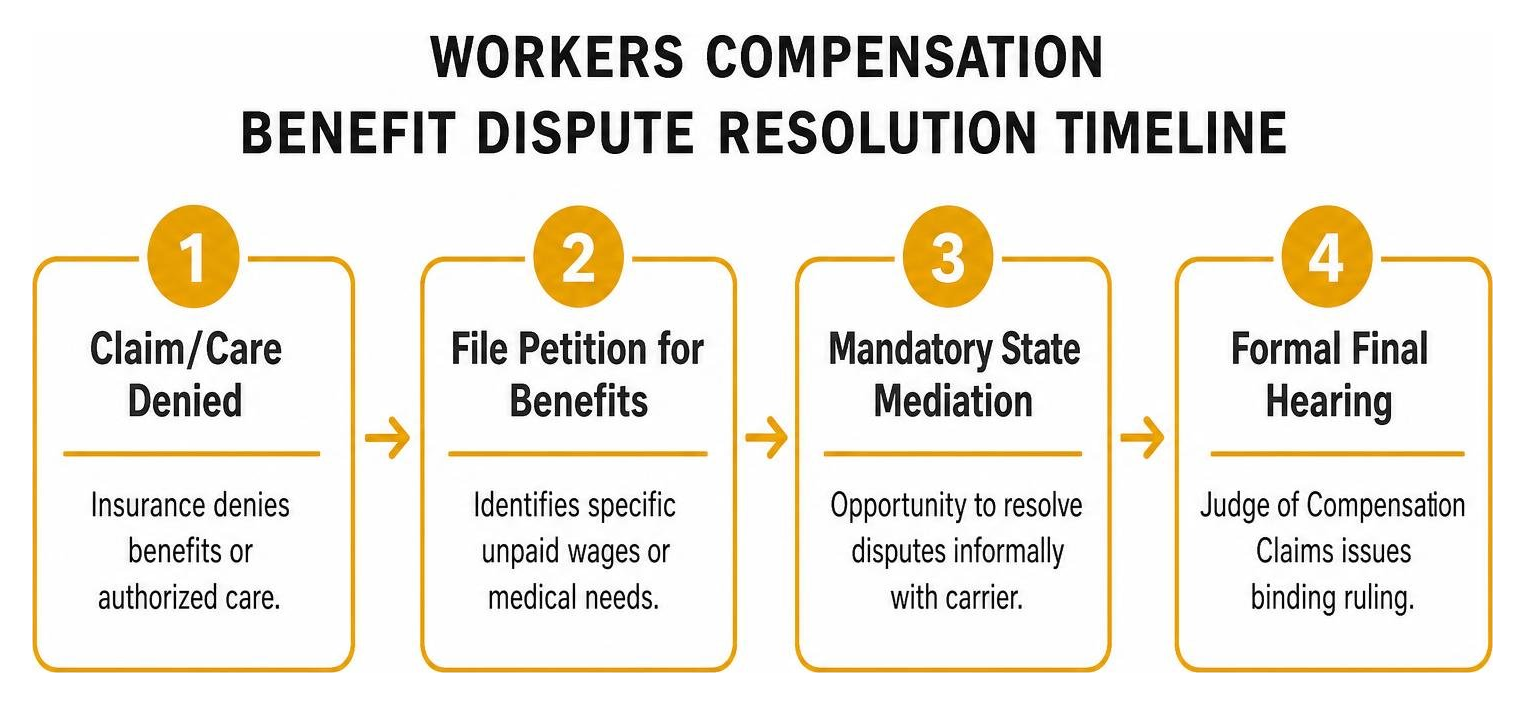
- Filing formal Petitions for Benefits to enforce your statutory right to authorized care.
Evaluating Client Testimonials and Peer Endorsements
Client testimonials offer insight into a firm’s empathy, communication standards, and overall reliability. Look for consistent feedback regarding:
- Prompt responses to phone calls and emails.
- Compassionate guidance during stressful medical treatments.
- Tenacity when negotiating final lump-sum settlements.
Combining client feedback with established peer ratings on platforms like Avvo and Martindale-Hubbell ensures you select counsel with proven technical skill and high ethical standards.
Frequently Asked Questions About Workplace Injury Lawyers
What is the difference between a workers’ comp lawyer and a personal injury lawyer?
A workers’ compensation lawyer focuses on administrative statutory claims against your employer’s insurance carrier, which provide medical coverage and partial wage replacement regardless of fault. A personal injury lawyer handles civil lawsuits against third parties who caused your injury through negligence, seeking comprehensive damages like pain and suffering. Many established practitioners handle both aspects to maximize their clients’ total financial recovery.
How much does it cost to hire an attorney for a workplace injury claim?
Hiring an attorney involves no out-of-pocket costs. Top workplace injury lawyers work on a contingency fee schedule approved by state law. If your lawyer secures a settlement or wins benefits at a hearing, their fee is calculated as a set percentage of that recovery. If no recovery is made, you do not owe attorney fees.
Can my employer fire me for hiring a lawyer after a workplace injury?
No. State law strictly prohibits employers from firing, demoting, or retaliating against an employee simply because they filed a valid workers’ compensation claim or hired an attorney. If an employer retaliates against you for exercising your statutory rights, they can be held liable for wrongful termination and statutory damages in a separate civil action.
Conclusion
Recovering from a severe on-the-job injury is physically and emotionally exhausting. You should not have to spend your recovery fighting insurance adjusters, chasing authorization for medical procedures, or worrying about missed paychecks.
At Panzer Law, P.A., we have spent over thirty years standing up for injured workers across Florida and New York. We provide clear answers, aggressive representation, and personalized attention from day one. We operate strictly on a no-recovery, no-fee model—meaning you owe us nothing unless we recover compensation for you. Contact us today to schedule your free consultation and let us protect your rights and future.
