

How to Apply for Workers’ Compensation After a Work Injury
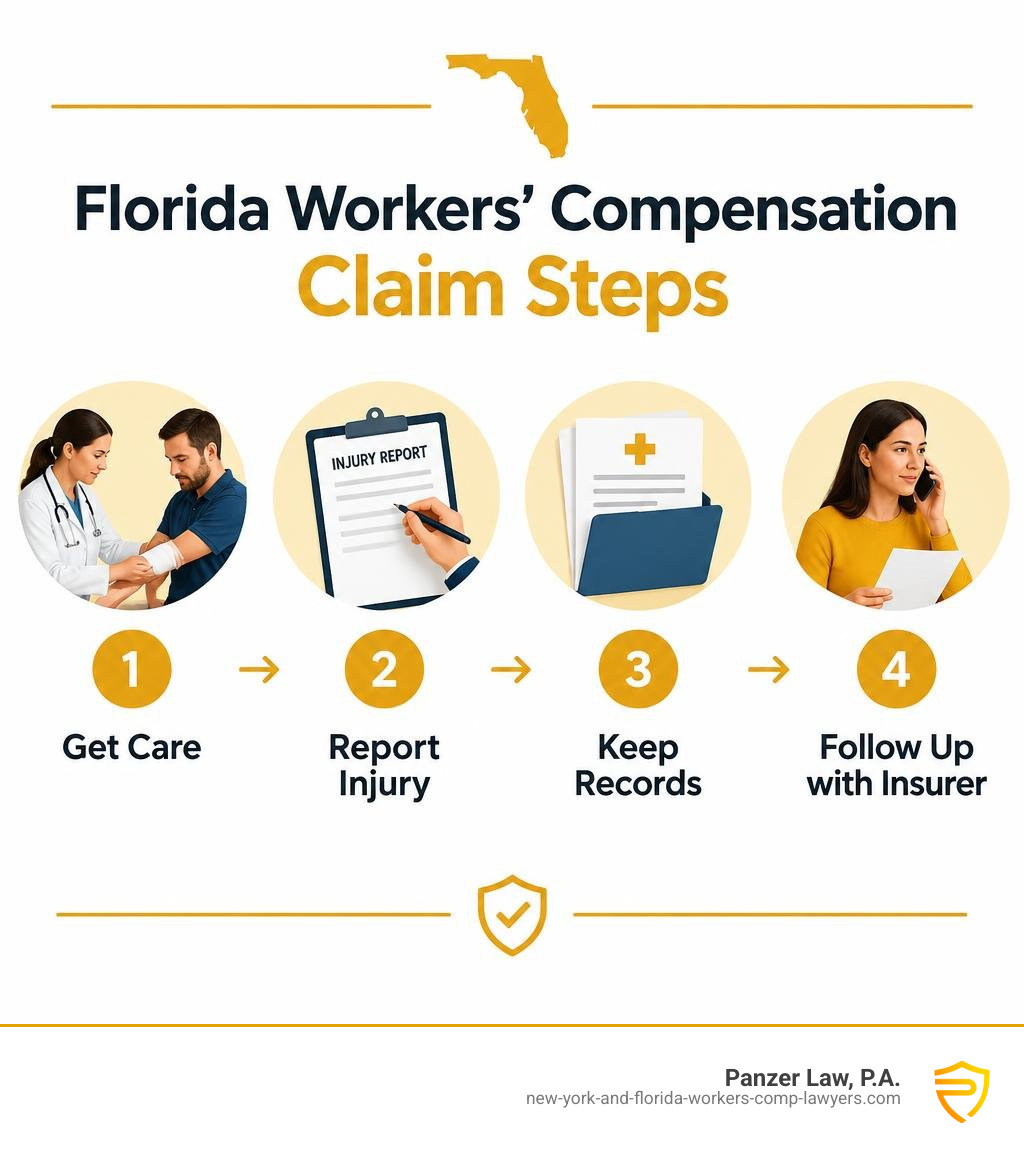
If you’re hurt at work, get medical care and tell your employer as soon as possible. Say that the injury happened at work, ask how to start a workers’ compensation claim, and keep copies of your report, medical records, and any letters from the insurer. In Florida, reporting deadlines can affect your right to benefits, so don’t wait for symptoms to get worse before speaking up.
Workers’ compensation may pay for approved medical treatment and part of your lost wages. If care or payments are delayed or denied, ask the insurer for its reason in writing and find out how to dispute the decision.
I’m Gil Panzer, owner and attorney at Panzer Law, P.A., with more than 30 years of legal experience helping injured workers in Florida and New York. I guide clients through applying for workers compensation, getting medical care, and resolving benefit disputes.
Understanding Workers’ Compensation Coverage and Eligibility
Workers’ compensation is a state-mandated, no-fault insurance system designed to protect both employees and employers following workplace accidents. Under this framework, injured staff receive vital medical care and wage-replacement benefits without needing to prove their employer acted negligently. In exchange, employers are generally shielded from personal injury lawsuits arising from workplace mishaps.
Whether you work in a bustling corporate office in Boca Raton, a distribution hub in Miami, or a construction site in West Palm Beach, statutory coverage ensures that job-related injuries and occupational illnesses do not result in personal financial ruin.
Who Is Covered Under State and Federal Laws
Most full-time and part-time employees are covered from their very first day on the job. In Florida, private employers in non-construction industries with four or more employees must carry workers’ compensation coverage, while construction businesses must secure coverage if they employ even a single worker.
However, certain exceptions apply:
- Independent Contractors: True independent contractors generally fall outside statutory workers’ comp laws. Unfortunately, employers sometimes misclassify workers to cut insurance overhead. Reviewing administrative guidance like the DWC FAQs for employees helps clarify whether your day-to-day supervision legally establishes an employment relationship.
- Federal Employees: Civilian federal personnel stationed throughout Florida receive benefits through the federal government under the Federal Employees’ Compensation Act rather than state systems.
- Maritime and Harbor Workers: Longshore workers, shipbuilders, and harbor employees are protected through federal statutes such as the Longshore and Harbor Workers’ Compensation Act.
Rights and Responsibilities of Injured Workers
Navigating the workers’ compensation system requires balancing your statutory protections with mandatory obligations:
- The Right to Medical Care and Wage Replacement: You are entitled to reasonable, necessary medical care for your injury and partial wage loss benefits if your physician places you off work.
- Protection Against Retaliation: Employers cannot legally discharge, intimidate, or discriminate against you for seeking your lawful benefits.
- The Duty to Report Promptly: You must give timely, formal notice of your injury to your supervisor.
- Treatment Compliance and Accurate Reporting: You are obligated to attend scheduled medical exams, comply with treating physician guidelines, and report any additional income earned while collecting temporary disability.
For an in-depth breakdown of these fundamental protections, explore a practical guide to filing workers comp claims.
Step-by-Step Process for Applying for Workers Compensation
Filing your claim methodically is essential for securing uninterrupted benefits. Mistakes made during the initial days following an incident can complicate claim acceptance.

Immediate Actions Following a Workplace Injury
Your immediate decisions set the legal and medical baseline for your entire claim:
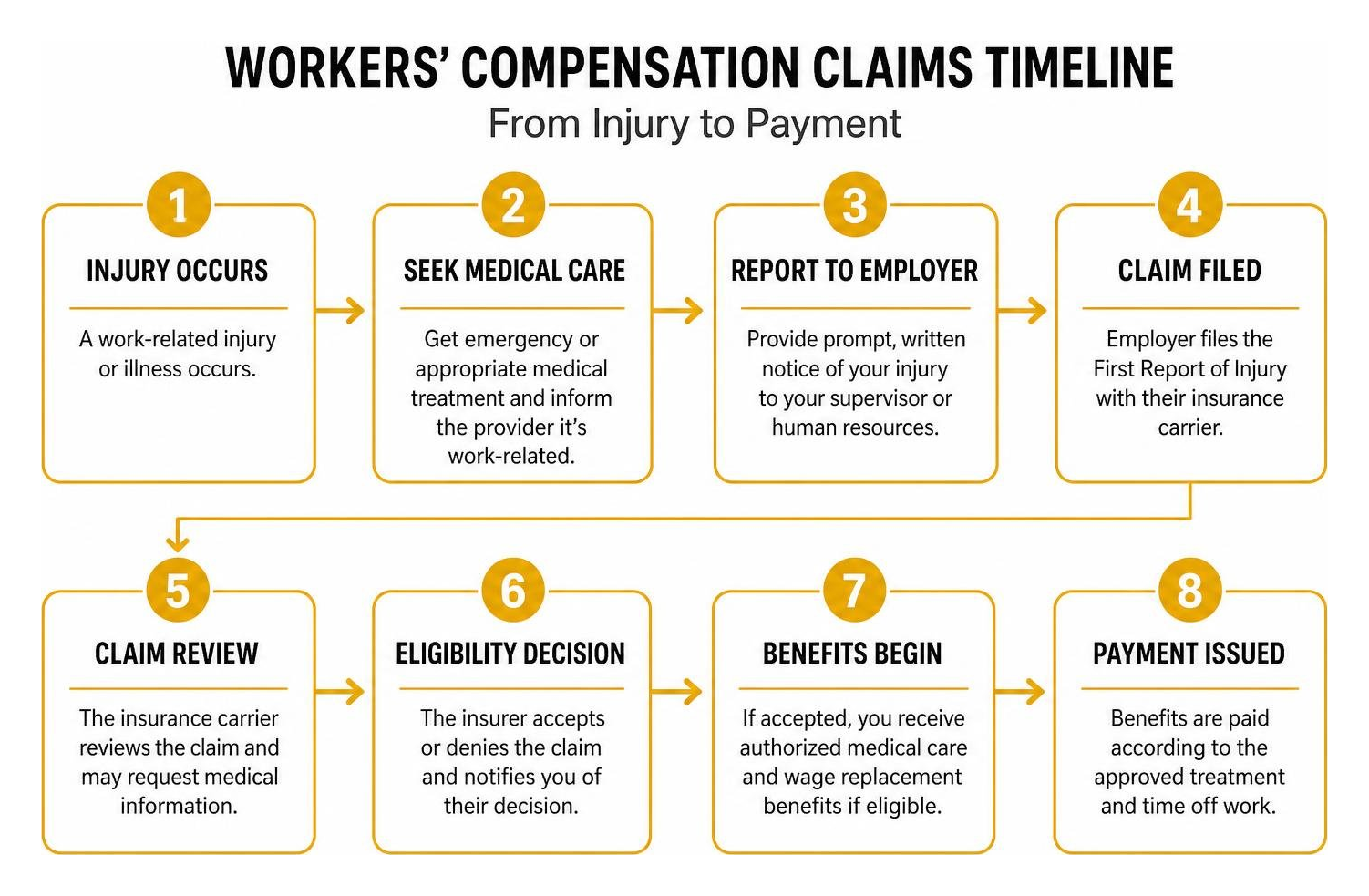
- Seek Emergency Care: In a life-threatening crisis, visit the nearest emergency room immediately and state clearly to medical staff that your injury occurred on the job.
- Provide Written Employer Notice: Formally notify your supervisor or human resources department in writing, retaining a date-stamped copy for your files.
- Log Incident Details: Document the exact date, time, physical location, and machinery involved, and record contact information for any co-workers who witnessed the event.
Essential Documentation Needed When Applying for Workers Compensation
Thorough recordkeeping minimizes administrative pushback. When building your claim file, compile:
- First Report of Injury Forms: Completed initial claim paperwork generated by your employer or insurance carrier. Helpful educational materials, such as the LIBC-100 WC & The Injured Worker Pamphlet, illustrate the standard documentation workflow expected across formal workers’ comp jurisdictions.
- Medical Documentation: Diagnostic imaging results, physician work-status slips, and itemized medical bills.
- Earnings Verification: Recent paystubs, W-2 statements, or payroll logs demonstrating your baseline earnings before the injury occurred.
Critical Deadlines and Timelines for Applying for Workers Compensation
Missing a statutory deadline can permanently forfeit your right to financial support. Keep these critical timeframes in mind:
| Jurisdiction / Procedural Action | Mandatory Notice Window | Formal Petition / Claim Filing Limit |
|---|---|---|
| Florida Workers’ Comp Law | 30 Days from date of injury or illness discovery | 2 Years from date of injury |
| General Administrative Benchmarks | 30 to 120 Days depending on statute | 1 to 3 Years for formal claim petitions |
| Formal Hearing Requests | Varies by jurisdiction | Up to 6 Years from injury or last payment |
Workers’ Comp Benefits: Wage Replacement, Medical Care, and Vocational Support
The primary objective of workers’ compensation is to restore your health and mitigate financial losses while you recover.

Medical Treatment Rules and Medical Provider Networks (MPN)
Your employer’s insurance carrier pays authorized medical bills directly, covering physician appointments, surgery, physical therapy, prescription medication, and medical travel mileage.
In many structured compensation programs, claims administrators must authorize immediate, necessary treatment—often up to $10,000—while an initial claim evaluation is conducted. Consult comprehensive publications like What happens if I’m injured on the job? to see how early care authorizations keep medical recovery moving forward.
In Florida, your employer or their insurer selects your treating doctor. If you require a change of physician, you are entitled by law to a one-time change of doctor, provided you submit a formal written request to the carrier.
Wage-Loss Calculation, Waiting Periods, and Payment Schedules
If your treating physician determines that your workplace injury prevents you from working, you qualify for indemnity payments based on your Average Weekly Wage (AWW):
- Benefit Rate: Temporary Total Disability (TTD) is generally calculated at two-thirds (66.67%) of your pre-injury AWW, capped by annual statutory maximums. In cases of severe trauma, this rate can increase to 80% for up to six months.
- Waiting Period: Florida requires a seven-day waiting period. Compensation is not paid for the first seven days of missed work unless your disability extends past 21 consecutive days, at which point those initial days are reimbursed retroactively.
- Payment Timelines: Once a claim is accepted, your first disability check is typically issued within 14 to 21 days of leaving work.
| Benefit Classification | Work Capacity Status | Standard Compensation Formula | Maximum Duration Limits |
|---|---|---|---|
| Temporary Total Disability (TTD) | Fully unable to perform any work duties | 66.67% of pre-injury Average Weekly Wage | Up to 104 weeks in Florida |
| Temporary Partial Disability (TPD) | Released to restricted/light duty at lower earnings | 80% of difference between current earnings and 80% of AWW | Up to 104 weeks (combined with TTD) |
| Permanent Impairment (PIB) | Reached Maximum Medical Improvement with permanent rating | Schedule based on impairment percentage rating | Paid according to impairment percentage |
Vocational Rehabilitation and Return-to-Work Programs
When you reach Maximum Medical Improvement (MMI) but retain permanent restrictions that prevent you from returning to your past occupation, re-employment services help you transition into new employment:
- Transitional Modified Duty: Employers are encouraged to offer temporary, light-duty assignments that accommodate your doctor’s work restrictions.
- Vocational Assessments & Retraining: State re-employment programs provide vocational counseling, resume development, and educational tuition support to help you re-enter the workforce safely.
Handling Claim Disputes, Denials, and Uninsured Employers
Insurers frequently challenge valid claims to minimize financial exposure. Understanding your appeal options ensures you can push back effectively against unfair denials.
What to Do If Your Workers’ Comp Claim Is Denied
If the insurance carrier issues a formal Notice of Denial, do not lose hope. Carriers often deny claims over minor clerical errors, disputed pre-existing conditions, or late reporting allegations.
To dispute a denial:
- Request the Written Denial: Demand the exact legal and medical grounds for the refusal in writing.
- File a Petition for Benefits: In Florida, formal disputes are initiated by filing a Petition for Benefits with the Office of the Judges of Compensation Claims (OJCC).
- Engage in Mandatory Mediation: State rules require parties to attend formal mediation conferences to attempt a voluntary resolution before advancing to a final hearing.
- Secure Experienced Representation: Review our detailed Florida workers comp lawyer claim representation guide and take time to find local workmans comp lawyers near you who understand local insurance defense strategies across Miami-Dade and Palm Beach County.
Options When Your Employer Lacks Workers’ Compensation Insurance
If an employer unlawfully fails to maintain required workers’ compensation insurance, injured workers still have legal remedies:
- Direct Employer Liability: You may have the right to file a direct civil lawsuit against your uninsured employer, where they are stripped of common-law defenses like comparative negligence.
- State Guaranty Programs & Enforcement: Regulatory divisions can issue stop-work orders and assess heavy monetary penalties against non-compliant businesses while directing injured staff toward state-administered injury relief funds.
Frequently Asked Questions About Applying for Workers Compensation
For additional insights into common workplace injury topics, browse our library of frequently asked questions.
How long does it take to receive your first workers’ compensation payment?
Under standard statutory rules, once you miss more than seven days of work and your claim is accepted, your initial lost-wage check should be issued within 14 to 21 days from the date your disability began. If you are off work for more than 21 days, benefits for the initial seven-day waiting period are paid retroactively.
Can I choose my own doctor after being injured on the job?
In Florida, the insurance carrier chooses your authorized treating physician for work-related injuries. However, you have the legal right to request a one-time change of physician during your claim. The insurer must provide an alternate physician within 14 days of your written request; if they fail to do so in time, you gain the right to select your own doctor.
What should I do if my employer refuses to file my workers’ comp claim?
If your employer ignores your injury report or refuses to notify their insurance company, contact the insurer directly. You can also report the injury to the state workers’ compensation division and file a formal Petition for Benefits with the assistance of a legal advocate.
Conclusion
Securing the medical treatment and wage-loss benefits you deserve requires strict adherence to statutory deadlines and careful documentation. Insurance carriers employ dedicated adjusters to protect their bottom line—you deserve an experienced advocate protecting yours.
At Panzer Law, P.A., we represent injured employees across Boca Raton, Miami, West Palm Beach, Palm Beach County, and Miami-Dade County. We operate on a strict no-recovery, no-fee model: you pay zero legal fees or costs unless we successfully secure benefits on your behalf.
If you are facing claim hurdles, contact an experienced Florida workers’ compensation lawyer at Panzer Law, P.A. today for a free consultation.
