

Finding a Workers Compensation Lawyer in West Palm Beach
Hurt at work in West Palm Beach? Tell your employer right away, ask for authorized medical care, and keep copies of your injury report and medical records. Florida generally gives you 30 days to report an injury. A workers compensation lawyer can help if treatment is delayed, your wage benefits seem too low, or the insurer denies your claim.
Florida’s system generally pays benefits without requiring you to prove your employer was at fault. But getting care and replacing lost wages can still be hard when a claim is disputed. According to the Florida Division of Workers’ Compensation, employees should report job-related injuries to their employer as soon as possible and seek authorized medical treatment to protect their right to benefits.
I’m Gil Panzer, a workers compensation lawyer West Palm Beach employees can rely on for help with medical care, denied benefits, and settlements. As owner of Panzer Law, P.A., I’ve spent more than 30 years representing injured workers in Florida and New York. When dealing with complex insurer tactics, consulting the best workers comp lawyers in florida ensures your statutory rights are safeguarded. Whether you need an experienced Florida workers’ compensation lawyer or are looking to hire a dedicated workers compensation lawyer in florida, our firm provides the focused advocacy your recovery requires.
Understanding Florida Workers’ Compensation Laws and Benefits
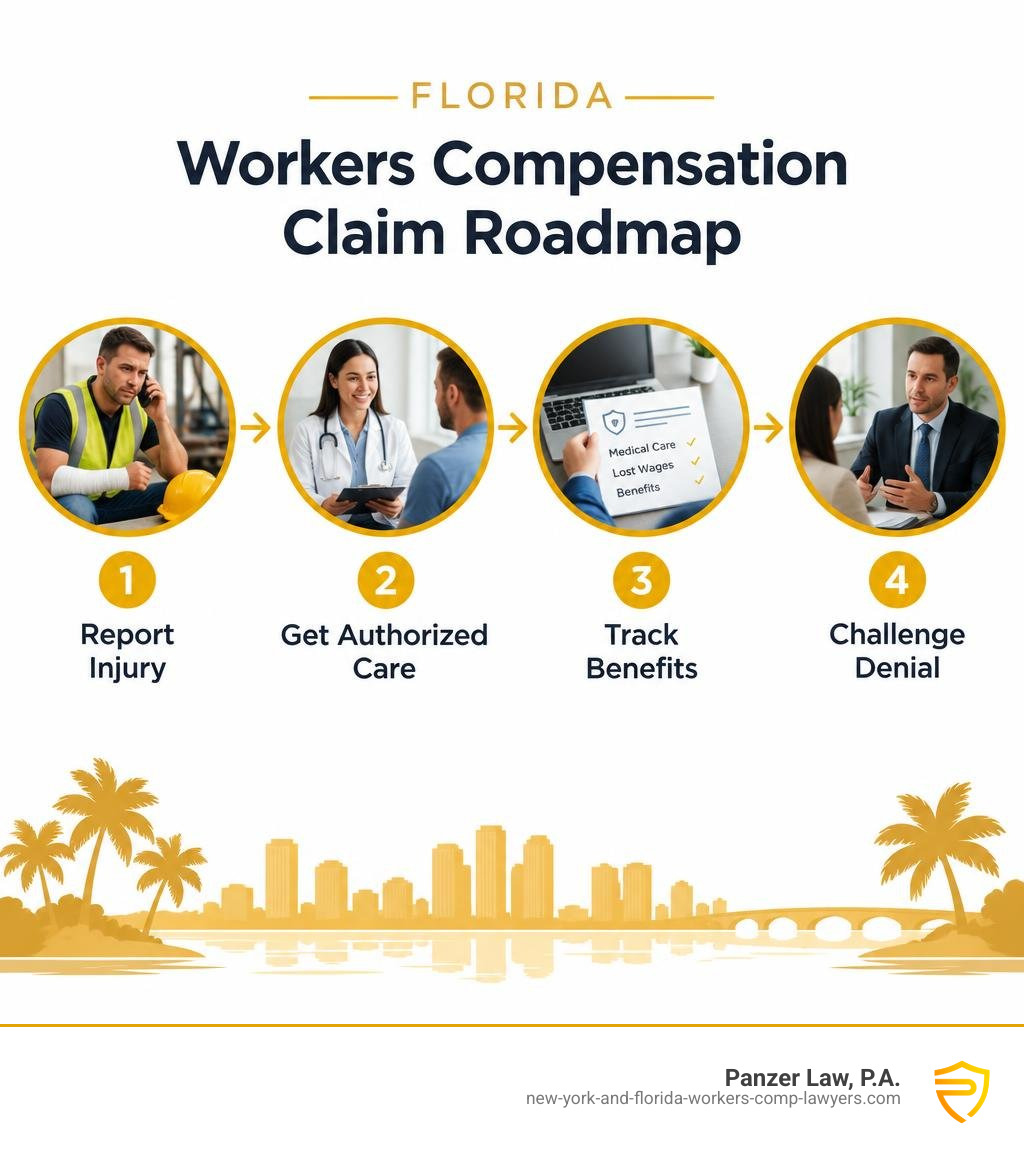
Navigating the workers’ compensation system after an injury can feel overwhelming, especially when you are trying to heal and make ends meet. Under Florida workers’ compensation laws, injured employees are entitled to statutory benefits designed to cover reasonable medical treatment and replace a portion of their lost income without having to prove employer fault.
In Florida, wage replacement is generally calculated at 66 2/3 percent (66.67%) of your Average Weekly Wage (AWW). For catastrophic injuries, such as paralysis or severe neurological trauma, temporary wage replacement can jump to 80% for up to six months. However, your weekly payment cannot exceed the state-mandated statutory cap. As of January 1, 2024, the maximum weekly workers’ compensation benefit in Florida is $1,260.
Once your physician determines you have reached Maximum Medical Improvement (MMI)—the point where your condition is not expected to significantly improve with further treatment—they will assign a Permanent Impairment Rating (PIR). This percentage score dictates how many weeks of impairment benefits you can collect. In the most tragic situations where an on-the-job incident results in death, Florida law provides up to $150,000 in total death benefits to surviving dependents, along with up to $7,500 in funeral expenses.
| Benefit Type | Eligibility Criteria | Weekly Wage Benefit | Maximum Statutory Duration |
|---|---|---|---|
| Temporary Total Disability (TTD) | Complete inability to work during the healing phase | 66 2/3% of AWW (up to 80% for specific catastrophic trauma) | Up to 104 weeks or until reaching MMI |
| Temporary Partial Disability (TPD) | Released to light duty with earning capacity under 80% of pre-injury wage | Up to 80% of the difference between 80% of pre-injury AWW and light-duty earnings | Up to 104 weeks (combined with TTD) or until MMI |
| Permanent Total Disability (PTD) | Inability to engage in at least sedentary employment within a 50-mile radius | 66 2/3% of AWW | Paid until age 75 (or lifetime if unqualifiable for Social Security) |
Medical Coverage and Wage Replacement Calculations
Under Florida law, your employer’s insurance carrier is responsible for providing all medically necessary care related to your workplace injury. This coverage includes:
- Diagnostic testing such as MRIs, CT scans, and X-rays
- Emergency room visits and authorized surgical procedures
- Physical therapy, occupational therapy, and chiropractic treatments
- Prescription medications directly tied to the injury
- Medical equipment (crutches, braces, wheelchairs)
- Mileage reimbursement for travel to and from authorized doctor appointments
Your wage replacement rate depends on your Average Weekly Wage (AWW), calculated by averaging the gross wages earned in the 13 weeks preceding your injury. If you worked multiple jobs at the time of the accident, wages from all covered employers must be combined to determine your baseline rate. Insurers often miscalculate this average or omit overtime, tips, and bonuses to lower their weekly payout.
Coordinating Social Security Disability with Workers’ Comp
Many injured workers wonder if they can collect Social Security Disability Insurance (SSDI) while receiving Florida workers’ compensation benefits. You can receive both simultaneously, but the federal government enforces strict offset rules.
Under federal law, the combined total of your workers’ comp wage replacement and SSDI benefits cannot exceed 80% of your average current earnings before your disability. If the combined amount exceeds this 80% threshold, your SSDI benefits are reduced accordingly. When resolving a claim through a lump-sum settlement, we structure specific settlement allocations and Medicare Set-Aside (MSA) agreements. By spreading the settlement payout across your remaining actuarial life expectancy, we help minimize or eliminate this federal offset, preserving your long-term income and Medicare eligibility.
Common Workplace Accidents and Eligibility in Palm Beach County

Palm Beach County is one of the fastest-growing commercial and residential areas in Florida, leading to active construction zones, busy logistics hubs, and bustling service sectors. In Florida, coverage thresholds are clear: non-construction employers with four or more full- or part-time employees must carry workers’ compensation coverage. In the construction industry, employers with one or more workers must provide coverage.
Workplace injuries in West Palm Beach range from acute traumatic accidents to gradual conditions caused by repetitive duties. Common incidents include:
- Falls from scaffolding, ladders, or elevated roofing structures
- Machinery malfunctions and crush injuries from manufacturing equipment
- Severe back and spinal trauma from heavy lifting or materials handling
- Repetitive strain injuries such as carpal tunnel syndrome and rotator cuff tears
- Occupational diseases resulting from toxic mold, chemical fumes, or asbestos exposure
High-Risk Industries: Construction, Warehousing, and Healthcare
Certain industries in Palm Beach County carry a disproportionate risk of severe harm. On construction sites, structural failures, trench collapses, and scaffold drops frequently lead to traumatic brain injuries (TBIs) and irreversible spinal cord damage.
In warehousing and distribution centers, forklift collisions, falling pallets, and repetitive loading routines can cause complex orthopedic fractures and debilitating nerve conditions, such as reflex sympathetic dystrophy (RSD) or Complex Regional Pain Syndrome (CRPS). Meanwhile, healthcare workers in West Palm Beach hospitals and nursing homes routinely sustain disc herniations and chronic spinal trauma when lifting and transferring non-ambulatory patients.
Independent Contractor Misclassification vs Employee Status
Employers and insurance carriers frequently attempt to deny valid claims by labeling workers as “independent contractors” (1099 workers) rather than statutory employees. Under Florida workers’ compensation law, your tax form or employment agreement does not determine your legal status.
Florida judges evaluate the “right of control” test to determine your true employment classification:
- Does the employer dictate your daily schedule, tasks, and work methods?
- Did the employer provide the necessary tools, safety gear, and materials?
- Are you paid on an hourly or salaried basis rather than a per-job bid?
- Is the work an integral part of the employer’s regular business operations?
If an employer controls the details of your daily work, Florida courts will treat you as an employee entitled to full statutory protections. Furthermore, under Florida’s statutory employer rules, general contractors on construction projects are legally responsible for providing coverage to uninsured subcontractor crews.
Crucial Steps After an Injury and Third-Party Lawsuits

The actions you take immediately following an accident on the job directly affect the success of your claim. To protect your rights and ensure continuous access to medical treatment, follow this process:
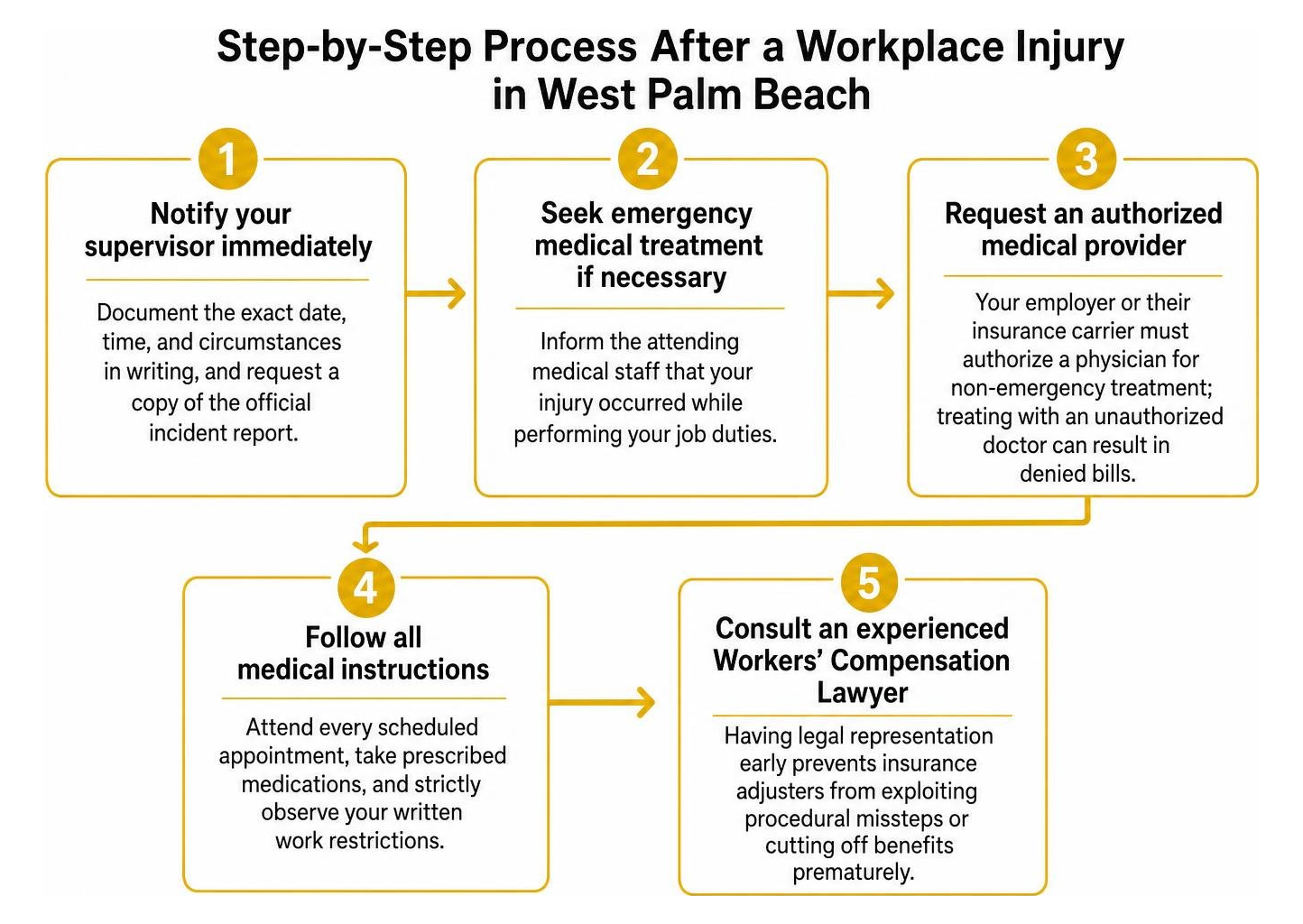
- Notify your supervisor immediately: Document the exact date, time, and circumstances in writing, and request a copy of the official incident report.
- Seek emergency medical treatment if necessary: Inform the attending medical staff that your injury occurred while performing your job duties.
- Request an authorized medical provider: Your employer or their insurance carrier must authorize a physician for non-emergency treatment; treating with an unauthorized doctor can result in denied bills.
- Follow all medical instructions: Attend every scheduled appointment, take prescribed medications, and strictly observe your written work restrictions.
- Consult an experienced Florida Workers Compensation Lawyer: Having legal representation early prevents insurance adjusters from exploiting procedural missteps or cutting off benefits prematurely.
Navigating the 30-Day Reporting Rule and Florida Statute of Limitations
Florida enforces strict procedural deadlines that you must observe to maintain your eligibility for benefits:
- The 30-Day Notice Requirement: Under Florida Statute 440.185, you must report your injury to your employer within 30 days of the incident or within 30 days of when a doctor first informs you that your medical condition is work-related. Missing this deadline gives the insurance company grounds to deny your claim entirely.
- The Two-Year Statute of Limitations: You generally have two years from the initial date of the injury to file a formal Petition for Benefits with the state.
- The One-Year Remedial Treatment Rule: Once your claim is accepted, you must receive authorized medical treatment at least once every 365 days. If a full year passes without seeing an authorized doctor or receiving wage payments, the statute of limitations expires, permanently barring you from requesting additional medical care or settlements.
Third-Party Personal Injury Claims vs. Workers’ Comp Immunity
Workers’ compensation is considered an “exclusive remedy,” meaning employers are generally immune from personal injury lawsuits for workplace accidents. You cannot sue your direct employer for pain and suffering unless they engaged in an intentional tort or failed to carry mandatory workers’ compensation insurance.
However, many on-the-job accidents involve negligence by third parties. In these scenarios, you can file a separate third-party personal injury lawsuit in civil court alongside your workers’ compensation claim. Common third-party liability situations include:
- Motor vehicle accidents caused by negligent drivers while you are driving for work duties
- Property owners who fail to maintain safe premises for visiting utility or service technicians
- Defective industrial equipment or power tools manufactured without adequate safety guards
- Negligent subcontractors or outside vendors operating on the same job site
Unlike workers’ compensation claims, third-party civil lawsuits allow you to recover full lost wages, diminished future earning capacity, and non-economic damages for physical pain, emotional distress, and loss of enjoyment of life.
How a Workers Compensation Lawyer West Palm Beach Resolves Denied Claims
Insurance carriers operate as for-profit businesses. As a result, adjusters often search for reasons to delay, undervalue, or outright deny legitimate claims. Common tactics include claiming an injury was caused by a pre-existing condition, arguing the accident occurred off the clock, or scheduling an Independent Medical Examination (IME) with a defense-oriented doctor who claims you need no further care.
When an insurer disputes your claim or prematurely halts wage replacement, our team at Panzer Law, P.A. intervenes. We gather comprehensive medical records, depose insurance adjusters and medical experts, calculate your accurate average weekly wage, and aggressively protect your rights. An experienced West Palm Beach Workers Compensation Lawyer levels the playing field against insurance defense firms.
Why You Need a Workers Compensation Lawyer West Palm Beach for Claim Petitions
When benefits are wrongfully withheld, resolution occurs through the Florida Office of the Judges of Compensation Claims (OJCC), not a standard civil jury trial. The formal litigation process involves several structured stages:
- Filing a Petition for Benefits (PFB): We submit a formal legal document specifying the exact medical treatments, back pay, or disability classifications the insurer has unlawfully denied.
- Mandatory State Mediation: Within 130 days of filing the PFB, the parties must attend mediation with a state-appointed mediator. This confidential session resolves the vast majority of claim disputes.
- Pre-Trial Conference and Evidentiary Hearing: If mediation reaches an impasse, we present your case before a Judge of Compensation Claims (JCC). We cross-examine defense experts, present deposition transcripts, and argue statutory law to secure your benefits.
Selecting the Right Workers Compensation Lawyer West Palm Beach for Your Case
Choosing legal representation can define the outcome of your recovery and financial stability. When evaluating attorneys in Palm Beach County, look for the following qualifications:
- Local Trial Experience: Ensure your attorney regularly practices before the local Judges of Compensation Claims in West Palm Beach and understands regional workers’ comp procedures.
- Dedicated Practice Focus: Choose a firm that concentrates specifically on workers’ compensation and administrative litigation rather than handling work injury claims as a secondary sideline.
- Contingency Fee Protection: A reputable workers’ comp lawyer operates on a contingency fee model, meaning you pay zero out-of-pocket costs or legal fees unless a financial recovery is won on your behalf.
- Transparent Communication: You should have direct access to your legal team, with clear updates regarding medical authorizations, mediation dates, and settlement discussions.
- Multilingual Support: Workplaces across South Florida are diverse; your law firm should offer fluent English and Spanish legal support to ensure clear communication.
Frequently Asked Questions About Florida Workers’ Compensation Claims
For additional answers and resources about your statutory rights, visit our Frequently Asked Questions page.
Can undocumented workers receive workers’ comp benefits in Florida?
Yes. Under Florida Statute 440.02, the definition of an “employee” includes every person providing service under an employment contract, regardless of whether they are lawfully or unlawfully employed. Undocumented workers are entitled to the exact same medical treatments and wage replacement benefits as any other employee. Furthermore, employers and insurers cannot threaten immigration retaliation to dissuade workers from filing legitimate claims.
Can my employer fire me for filing a workers’ compensation claim?
No. Florida Statute 440.205 explicitly prohibits employers from firing, threatening, or coercing an employee because they claimed or attempted to claim workers’ compensation benefits. If your employer terminates your employment in retaliation for asserting your statutory rights, you have the right to file a civil lawsuit in Circuit Court to recover lost wages, compensatory damages, and emotional distress compensation.
What should I do if my authorized doctor rushes my return to work?
Workers’ compensation doctors are selected and paid by the insurance carrier, which sometimes creates a conflict of interest where a physician attempts to return you to full-duty work before your body is ready. Under Florida law, you have an absolute statutory right to request a one-time change of physician at any point during your claim.
Once you make this request in writing, the insurance carrier has 14 calendar days to authorize a new doctor. If the carrier fails to provide an alternate physician within that 14-day window, you gain the legal right to select any doctor of your choice, and the insurer must cover the cost.
Conclusion
A sudden workplace injury should not compromise your family’s financial security or your long-term health. At Panzer Law, P.A., we represent injured workers throughout West Palm Beach, Boca Raton, Miami, and surrounding South Florida communities. We ensure insurers pay the full medical and indemnity benefits our clients are owed under Florida law.
We handle every case on a strict contingency fee basis—meaning you owe no upfront fees, out-of-pocket expenses, or attorney costs unless we secure compensation for you. If you are struggling with a delayed claim, low wage benefits, or an unfair denial, contact our team today for a free case evaluation with a dedicated West Palm Beach workers compensation lawyer.
Ready to discuss your claim? Contact Us today to speak directly with an attorney and take control of your recovery.
