

Is Hiring a Workers’ Comp Attorney Worth It?
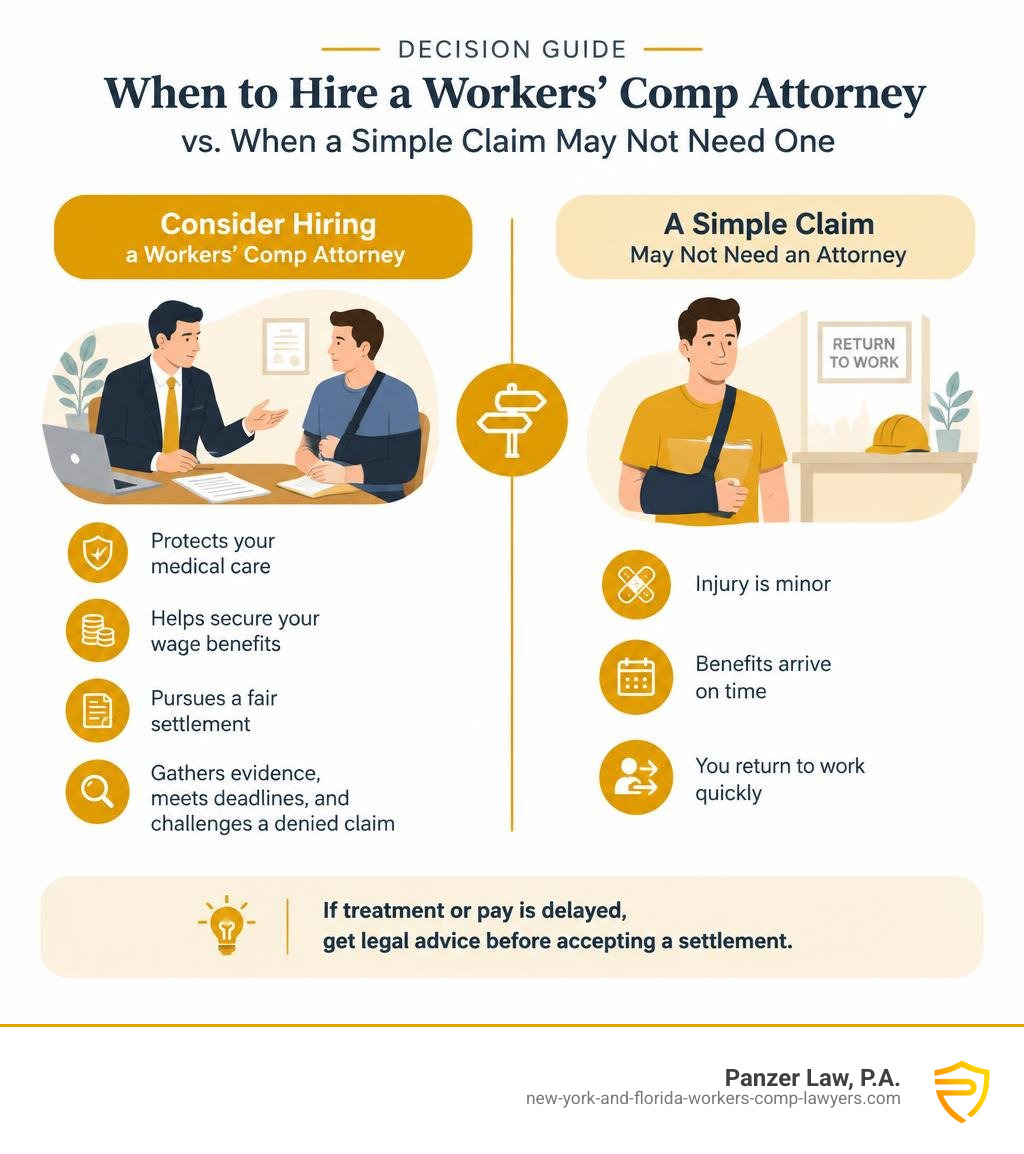
The main benefit of hiring a workers’ comp attorney is help protecting your medical care, wage benefits, and potential settlement. A lawyer can gather evidence, meet deadlines, and challenge a denied claim. The drawbacks are that legal fees reduce what you receive from a recovery, and a disputed case may take longer. If your injury is minor, your benefits arrive on time, and you return to work quickly, you may not need a lawyer. If treatment or pay is delayed, get legal advice before accepting a settlement.
I’m Gil Panzer, owner and attorney at Panzer Law, P.A. I’ve spent more than 30 years helping injured workers in Florida and New York with claims, medical care, and settlements, and this guide will help you weigh the pros and cons of hiring a workers comp attorney.
Weighing the Pros and Cons of Hiring a Workers Comp Attorney
Suffering an on-the-job injury turns your life upside down in an instant. Suddenly, you must navigate an unfamiliar maze of medical authorizations, insurance claims adjusters, and paperwork while dealing with physical pain. Evaluating the pros and cons of hiring a workers comp attorney helps you make an informed choice for your health and financial security.
Insurance companies handle hundreds of claims every single week. Their primary goal is managing costs and minimizing payouts. Having seasoned legal counsel levels the playing field and ensures your rights are protected throughout the dispute resolution process.
| Decision Factor | Handling the Claim Without an Attorney | Having Dedicated Legal Representation |
|---|---|---|
| Claim Valuation | Often limited to initial insurer calculations | Thorough valuation including future medical costs and lost earning capacity |
| Medical Treatment Access | Limited to insurance-preferred medical provider lists | Direct assistance enforcing your right to authorized, independent care |
| Handling Denials & Appeals | Complex administrative filings with strict procedural deadlines | Formal petitions for benefits, evidence presentation, and hearing representation |
| Settlement Outcomes | Risk of undervaluing permanent impairment ratings | Significantly higher average gross settlements through aggressive negotiation |
| Out-of-Pocket Risk | No direct legal fee, but risk of losing unpaid wage benefits | Contingency fee model: no upfront costs and zero attorney fees unless you recover |
| Time & Stress | Complete burden on the injured worker during physical recovery | Case management, legal filings, and adjuster communication handled for you |
The Major Advantages: Pros and Cons of Hiring a Workers Comp Attorney

When you look at the advantages, professional legal advocacy offers concrete benefits:
- Maximized Settlement Payouts: Industry studies consistently demonstrate that represented workers walk away with significantly higher payouts than those who self-represent. Data shows represented claimants frequently secure settlements that are double or more the amount of unrepresented claims, as experienced attorneys calculate long-term impairment ratings and future medical needs rather than accepting quick lowball offers.
- Comprehensive Evidence Collection: Building an unshakeable claim requires independent diagnostic testing, expert medical opinions, formal doctor depositions, and wage loss documentation. We know how to gather and present evidence to satisfy statutory standards.
- Navigating Bureaucratic Hurdles: A single misstep when filing a workers’ comp claim can delay wage-replacement checks for months. A lawyer manages mandatory filings and adheres to strict deadlines.
- Protection Against Employer Retaliation: State laws strictly prohibit employers from firing, demoting, or punishing you for asserting your right to workers’ compensation benefits. Having an attorney on record provides a legal shield against unlawful workplace retaliation.
- Identification of Third-Party Negligence: If a defective tool, toxic chemical, or negligent outside subcontractor contributed to your accident, we can identify third-party personal injury claims that allow you to recover pain and suffering damages beyond basic workers’ compensation benefits.
The Potential Drawbacks: Pros and Cons of Hiring a Workers Comp Attorney
To provide a fair assessment, you should also understand the potential downsides:
- Contingency Fee Deductions: An attorney’s payment comes as an approved percentage deducted directly from your final cash recovery or disputed retroactive benefits.
- Potential for Extended Case Timelines: While attorneys often resolve administrative delays, thoroughly developing medical evidence and contesting stubborn insurers can lengthen the overall time to reach a final lump-sum resolution.
- Strict Formal Procedures: Once legal counsel is retained, communications become formal. You will no longer deal directly with your insurance adjuster, and medical dispute resolution must strictly follow statutory legal channels such as those detailed in official state guidelines on attorney representation.
When You Need an Attorney vs. Handling a Claim on Your Own

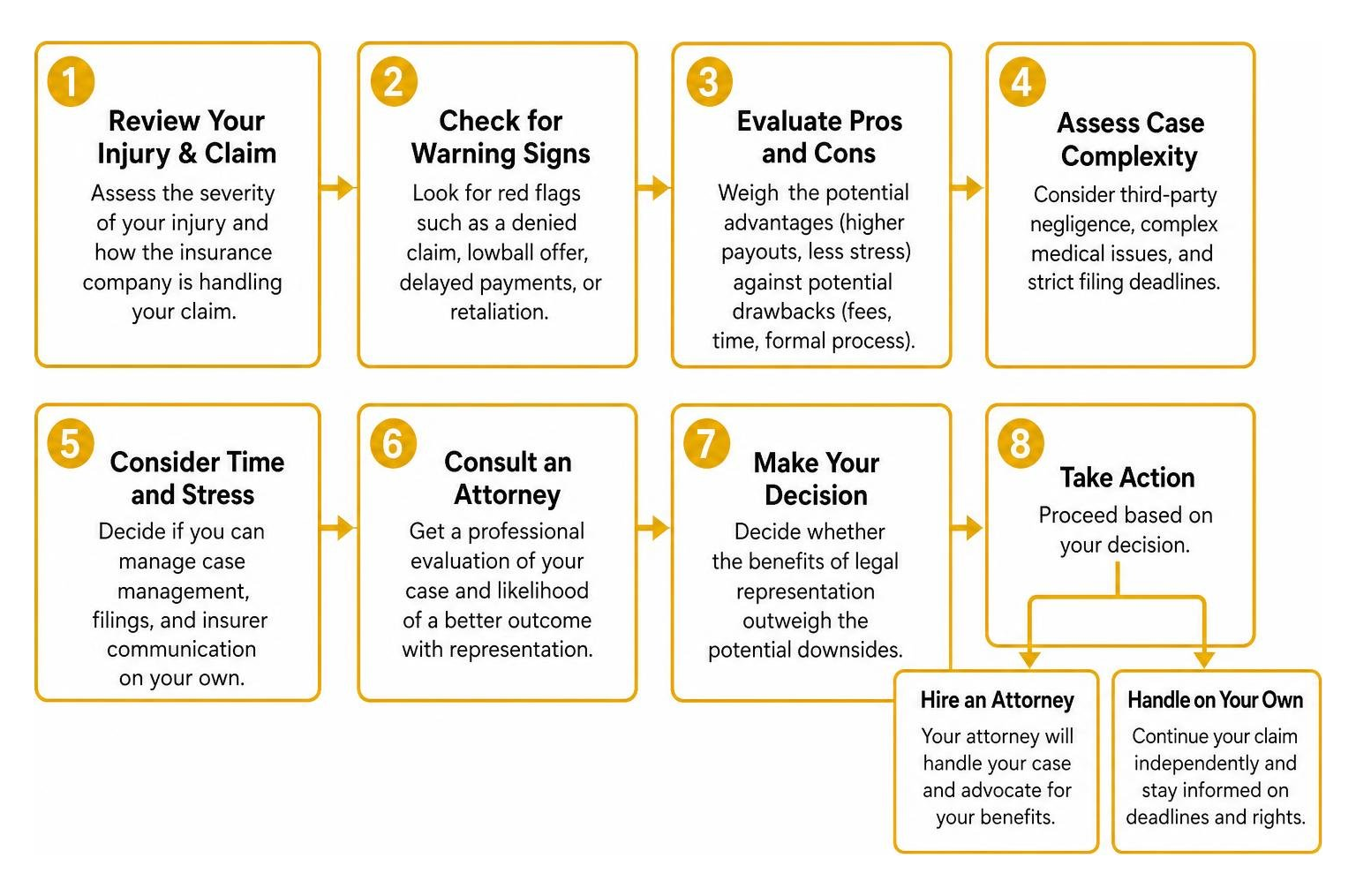
Knowing whether your situation calls for legal representation comes down to the severity of your injury and whether the insurance company treats your claim fairly.
Warning Signs That Require Legal Representation
If your claim encounters any of the following red flags, consulting an experienced attorney is essential:
- Your Claim Is Outright Denied: The insurer claims your injury didn’t happen at work, missed a notice deadline, or resulted from a non-work activity.
- The Insurer Blames a Pre-Existing Condition: Adjusters often point to an old back ache or prior medical chart note to argue that your current disability is not work-related.
- Authorized Medical Care Is Delayed or Denied: The adjuster drags their feet approving vital MRIs, physical therapy, specialist consultations, or surgery.
- You Suffer Cumulative Trauma or Catastrophic Harm: Repetitive stress conditions or severe injuries involving permanent partial or total disability require complex vocational and medical proof to secure proper compensation.
- You Face Social Security Offsets: If you receive or plan to apply for Social Security Disability Insurance (SSDI), a poorly drafted workers’ comp settlement can drastically reduce your monthly federal disability checks. An attorney can structure your settlement to minimize this offset.
Straightforward Scenarios Where Self-Representation Works
You might not need to hire an attorney if your claim checks all of the following boxes:
- You suffered a minor injury, such as a shallow cut requiring a few stitches or a mild ankle sprain.
- You missed no time from work, or returned to full duty within a few days.
- Your employer immediately accepted the claim and reported it to their carrier without dispute.
- All initial medical bills were promptly paid in full by the insurer.
- Your treating doctor releases you with zero permanent physical restrictions or lasting impairment.
If your injury goes beyond these simple parameters, understanding your true hurt at work: compensation and medical coverage is critical to avoid being shortchanged on vital benefits.
How Attorney Fees and Settlement Values Work in 2026
The most common concern injured workers have is the cost of hiring legal counsel. Workers’ compensation lawyers operate almost exclusively on a contingency fee basis.
Under this model:
- You pay $0 upfront to retain an attorney.
- The law firm advances all required litigation costs, such as medical record fees, deposition transcripts, and expert witness retainers.
- The attorney receives payment only if they secure a cash settlement or win disputed retroactive benefits on your behalf.
- If no money is recovered, you owe zero attorney fees.
Every fee arrangement must strictly follow statutory regulations and pass formal judicial scrutiny before a single dollar is disbursed. For a comprehensive overview of how contingency fee models function across personal injury and compensation cases, review contingency fee structures across legal settlements.
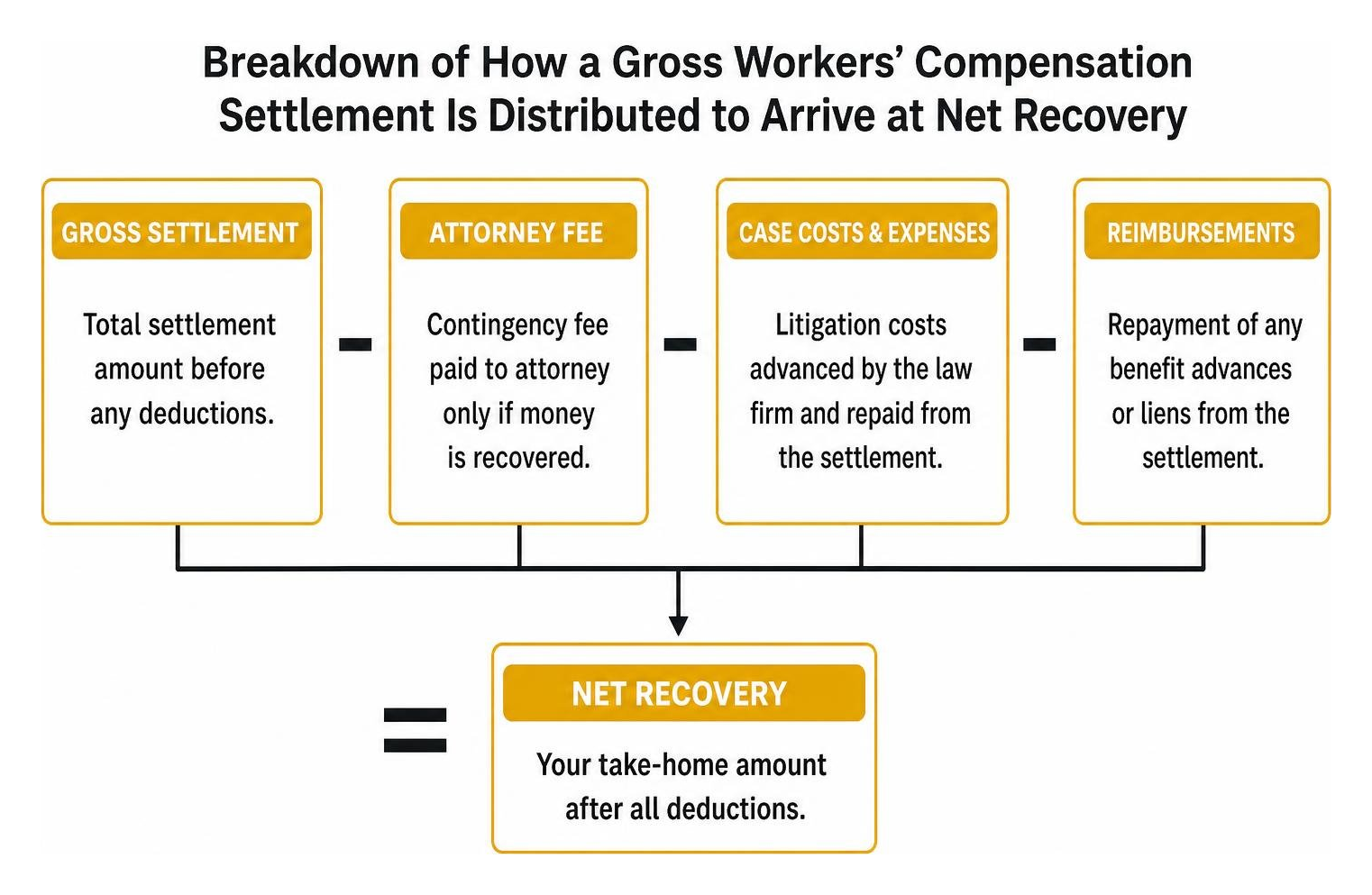
Calculating Your Net Settlement Amount
Understanding your final take-home recovery requires looking at how a gross settlement is distributed. To see how these calculations operate in practice and what variables impact your final number, check our guide on how much a workers’ comp settlement pays.
Essential Clauses to Review in a Fee Agreement
Before hiring legal representation, review your written retainer agreement for these critical terms:
- Clear No-Recovery, No-Fee Language: Confirm that you will never receive an out-of-pocket invoice for legal hourly rates if your claim is unsuccessful.
- Cost Advancement Terms: The agreement must clearly specify that the firm advances out-of-pocket costs and reimburses itself solely from the gross recovery.
- Sliding Fee Schedules and Caps: Fee percentages are capped by law and typically range from 10% to 25% depending on the specific recovery milestone and state limits.
- Quantum Meruit Provisions: This standard legal provision outlines how work performed by a prior attorney is resolved if you change legal counsel, ensuring you are never double-billed for legal representation.
How to Choose the Right Workers’ Comp Lawyer
Selecting the right attorney can significantly influence your recovery and peace of mind. Workers’ compensation is a highly specialized area of administrative law that requires focused experience.
To find an attorney who meets your needs, review our practical guide to finding a top-rated workers’ comp lawyer.
Key Questions to Ask During Your Initial Case Review
During your free consultation, ask prospective lawyers these targeted questions:
- How many years have you specifically practiced workers’ compensation law?
- Do you handle workers’ comp claims exclusively, or is it just a sideline for your general practice?
- What is your specific track record taking contested cases before workers’ compensation judges?
- How frequently will your office provide updates regarding my claim and medical treatment authorizations?
- Who will personally handle my depositions, settlement mediations, and hearings?
Critical Mistakes an Attorney Helps You Avoid
Handling your claim without representation leaves you exposed to tactical traps commonly set by insurance adjusters:
- Giving Damaging Recorded Statements: Adjusters ask leading questions designed to get you to downplay your pain or admit to unrelated past activities.
- Missing Inflexible Statutory Deadlines: Failing to report your injury within statutory deadlines or missing petition filing windows will permanently bar your claim.
- Premature Maximum Medical Improvement (MMI) Sign-Offs: Insurance-selected doctors often rush to declare an injured worker “healed” to cut off weekly indemnity checks before true physical recovery occurs.
- Uncoordinated Benefit Filings: Mismanaging the interaction between workers’ compensation checks, private short-term disability policies, and SSDI can lead to severe penalties or benefit reductions.
Frequently Asked Questions About Workers’ Comp Legal Representation
Does hiring a lawyer delay the workers’ comp claim process?
Hiring an attorney does not inherently slow down your benefits. While building formal medical evidence to counter a stubborn insurance denial takes diligent effort, an attorney often speeds up delayed medical appointments and overdue wage checks by filing emergency petitions for benefits.
What percentage does a workers’ comp attorney typically take from a settlement?
Workers’ compensation attorney fees are tightly regulated by state statutes and must be reviewed and approved by a workers’ compensation judge. Depending on the jurisdiction and procedural phase, fees typically range from 10% to 25% of past-due benefits or the total lump-sum cash settlement.
Can an employer retaliate against an employee for hiring a workers’ comp lawyer?
No. State laws strictly prohibit employers from firing, threatening, demoting, or harassing an employee for filing a claim or hiring legal representation. If an employer retaliates against you, they expose themselves to substantial civil liability and wrongful termination damages.
Conclusion: Making the Right Decision for Your Work Injury Claim
Deciding whether to retain legal representation comes down to evaluating the complexity of your injury, the honesty of the insurance carrier, and what is at stake for your future. When injuries are serious, disputes arise, or the insurer offers a quick, low settlement, the guidance of a dedicated attorney helps protect your health and your financial recovery.
At Panzer Law, P.A., we have spent decades standing up for injured workers across Florida and New York. With offices in Boca Raton, Miami, and West Palm Beach, our team is dedicated to securing the full medical care and wage-loss compensation you are entitled to under the law. We operate strictly on a no-recovery, no-fee model, meaning you pay nothing unless we win your case.
Contact the dedicated team at Workers Comp Law Firm Panzer Law today to schedule your free, confidential consultation.
